
Pitch
Iron Blade is a 2D Action Platformer where the player plays as a daring knight, venturing through the Dark Tower and pushing back the forces of evil with their giant sword.
The intent of this game was to create a basic system that created interesting platforming and combat scenarios for the player throughout the game.
Overview
Iron Blade has the player traverse through a castle and outside of it that has crumbled over the years. Players will be navigating through the ruins and defeating enemies in there in response to a spirit asking for their help in escaping. Players can move and jump around the castle, but the main mechanics come down to the player’s sword. Swinging the sword deals damage to enemies but also carries the player in the direction of the swing with momentum. The player also has the power to throw their sword and grapple to it after it stops. The player uses these mechanics to defeat enemies and to make their way up the decaying castle, but must be careful as they can only get these movement bonuses a set amount of times before touching the ground again.
Platform
PC/Console
Date
Spring 2023/Fall 2024
Genre
Platforming
Role
Systems/
Level Design
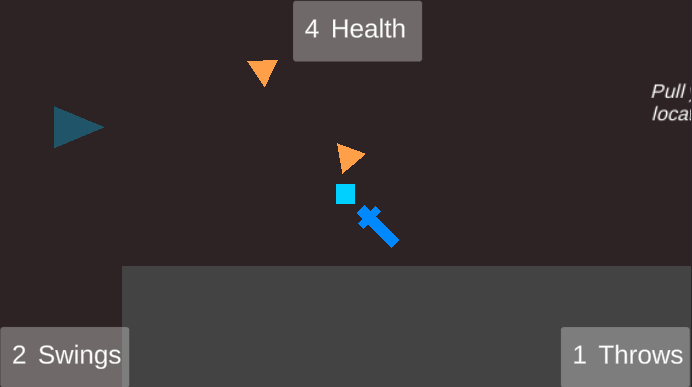
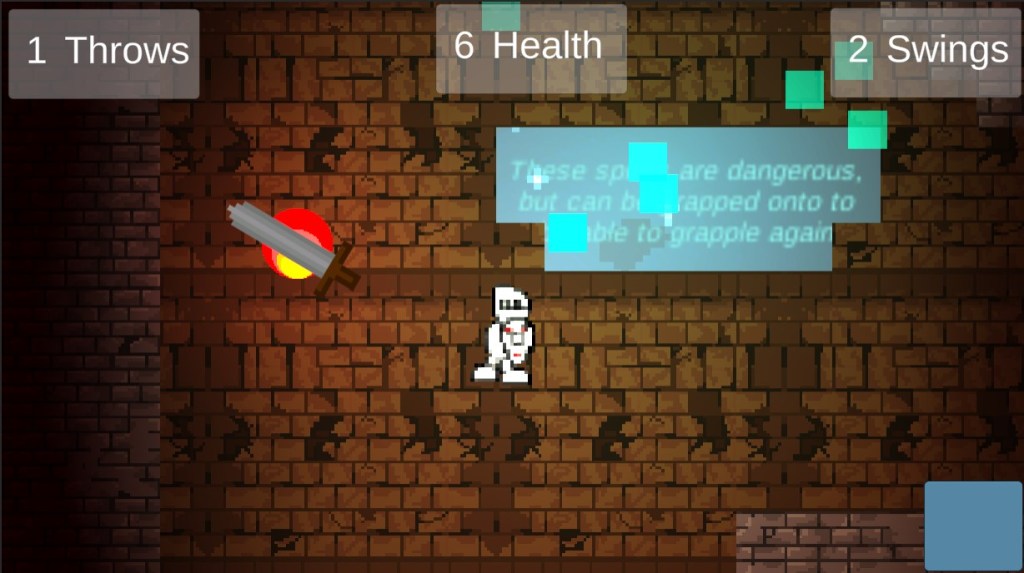
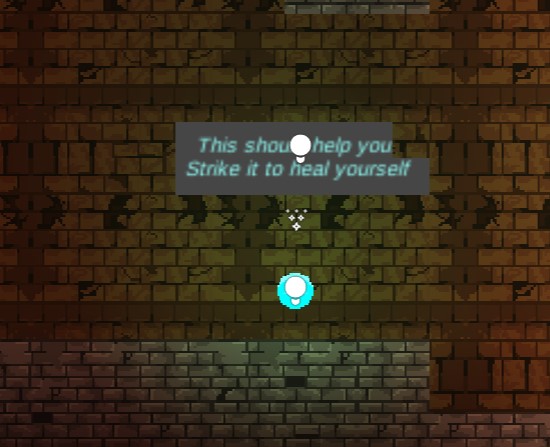
ROLE 1
Systems Designer
One area of Iron Blade I focused on throughout the design of the game was the game’s systems. Specifically, my intent was focused on creating a system that could facilitate platforming and combat. The sword system with the weight carrying the player and the grappling system was in development for a while and I went through rounds of iteration on tweaking the variables, the enemies, and the levels to make sure it felt good to use in both situations.
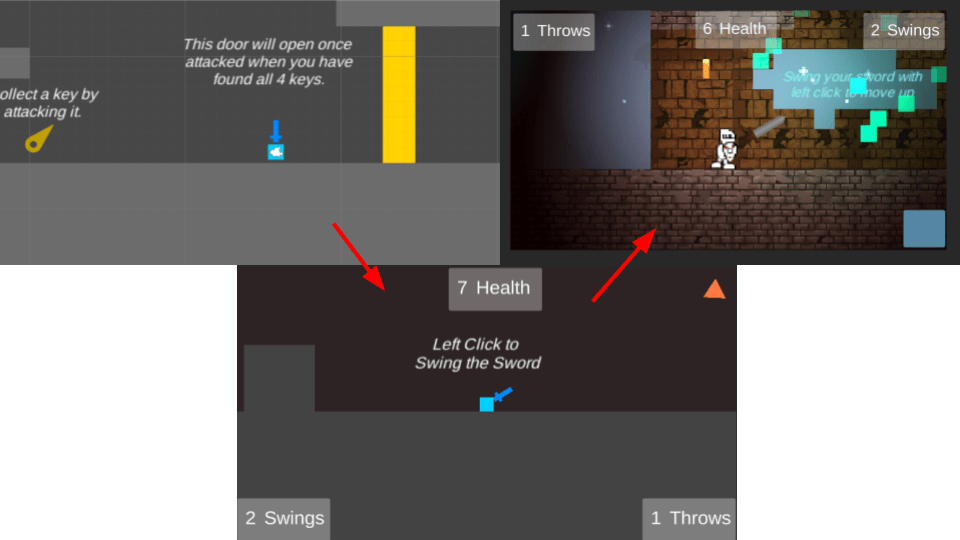
Image shows iteration of the design of the assets and game feel, as well as the tutorial systems in place.
ROLE 2
Level Designer
Another area I focused on was with he Level Design. Several passes were done on creating a tutorial level for the game that taught the player the mechanics and was balanced overall. Not only did I focus on the gameplay design of the level, but also the context and narrative regarding it. A tile set was added into the game to not only make level layouts easier to create but to also help make designing the visual look of the level easier to do. That, along with new assets I created for the level, makes this experience very immersive and engaging to play.
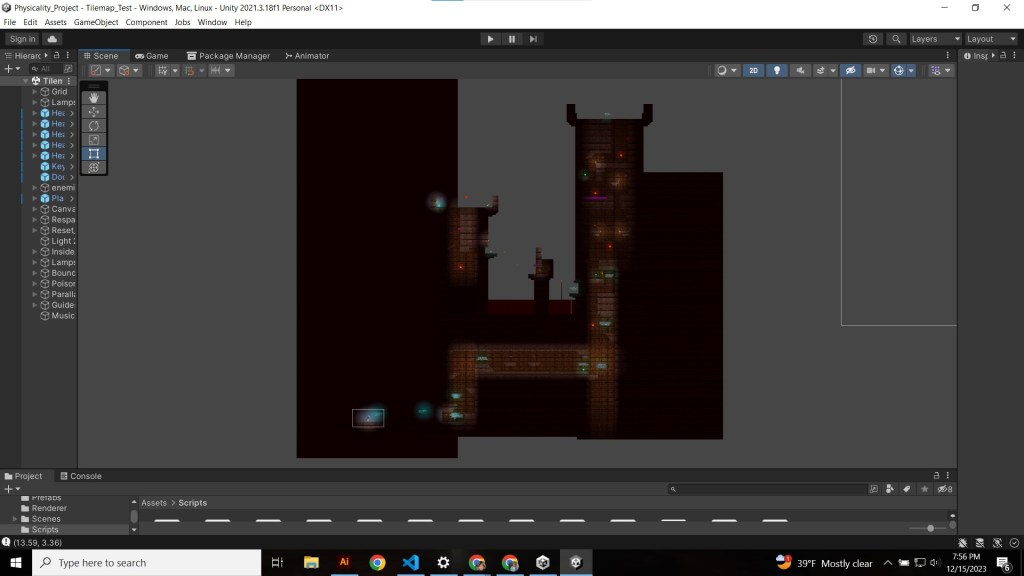
Editor overview of the level, showing off the scale and layout of it all
ROLE 3
Enemy Designer
The final area of note I focused on was with the enemy design and design of obstacles. The goal was to create a relatively small number of enemies that all had engaging interactions with the player’s sword mechanics. Each enemy interacts with the player’s attacks in different ways, like being able to smack flying enemies to stun them or grapple onto larger enemies to gain more movement and height by bouncing off of them. The enemies were developed at the start of the project, but iterated on over time to better fit the mechanics and the game world.
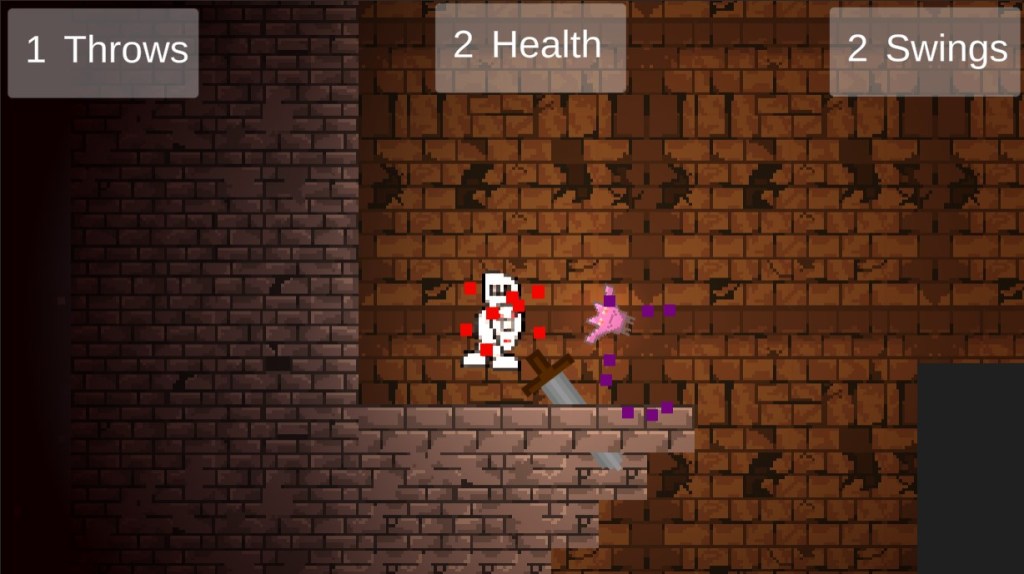
Player attacking enemy, showing interaction of the player and bat enemy taking damage
Research
For research on Iron Blade, I wanted to find sources on both the platforming and combat sides of my game. I also wanted to look for sources on how to create a good game feel as I was still unsure in the beginning on how to make my game feel good to play. Looking online, I was able to find the Game Developer website, which had tons of articles related to design philosophies within games and game design. Looking at the articles, I found one about how Super Mario Bros nailed platformer game feel and created an entirely different experience from others of the time with basic features like running and momentum carrying while turning. This was what I wanted to do with my system, create a very basic system that adds depth to the game’s platforming with the feel of the inputs of the player. Looking into the combat side of the design, I found an article related to combat systems and how they engage players. I got some helpful tips from this about the different ways to promote a risk and reward system. I used this when considering the limitations to the amount of times a player could use the sword in the air and considering how enemies attacked. It also explained how combat systems challenge players in different ways and this was used when mapping out the player’s options and what downsides there were to each. Finally when building my concept in the engine, I found another article related to game feel and how it is created. There was a lot in there about how the controls and environment contribute to game feel and this led me to focusing on how the player moves in the air with gained momentum and how the levels are designed in order to challenge the player to engage with the sword mechanics. I feel that all of these Game Developer articles overlapped in different ways when considering the combat and platforming in my game and assisted me a lot in deciding how my concept felt in the engine and what areas to focus on in my design.
Documentation
Systems Documentation
This document is a Game Design Document focused on the systems I created for my game. It shows off all of the background thoughts I had and intent of my game, as well as gameplay examples of how my game plays moment to moment.

This document is a visual of the major systems and gameplay of Iron Blade. It shows off the main controls, with the game being played on PC with keyboard and mouse controls. It also shows off the major player mechanics of swinging and grappling for movement, as well as the limits placed on these systems to balance it for platforming. Enemy interactions are also shown here as well, so this document gives a pretty clear overview of the gameplay itself.
Design Changelog
This document is a changelog I kept of the fist rounds of iteration on the design of the level, systems, and new implementation of things.

One of the more important changes was the addition of healing through destroyable health items in the game. The first iteration of these were green squares that sat on platforms and were destroyed by attacking with the sword. They restored up to 2 lost health of the player’s 5 total HP at the time.

Another important change was the addition of keys and doors. Originally just a yellow arrow sprite and a yellow block, this was an alternative objective for the player where they explored an open area to find 4 keys and bring them back to unlock the door. It allowed for the creation of a more open part of a level that encouraged exploration.
 William Chrin